A construction loan doesn't release funds all at once. Instead, money comes out in stages called draws — one for each phase of construction. Understanding how draws work is one of the most useful things a homeowner can do before breaking ground.
6–10
draws in a typical custom home build
3–10 days
from draw request to funds received
Interest-only
payments on what has been drawn
What is a construction draw?
A construction draw is a disbursement of funds from your construction loan. Instead of receiving the full loan amount upfront, the money is released in stages as work is completed. Each draw covers a specific phase of construction — site preparation, foundation, framing, mechanical rough-in, and so on.
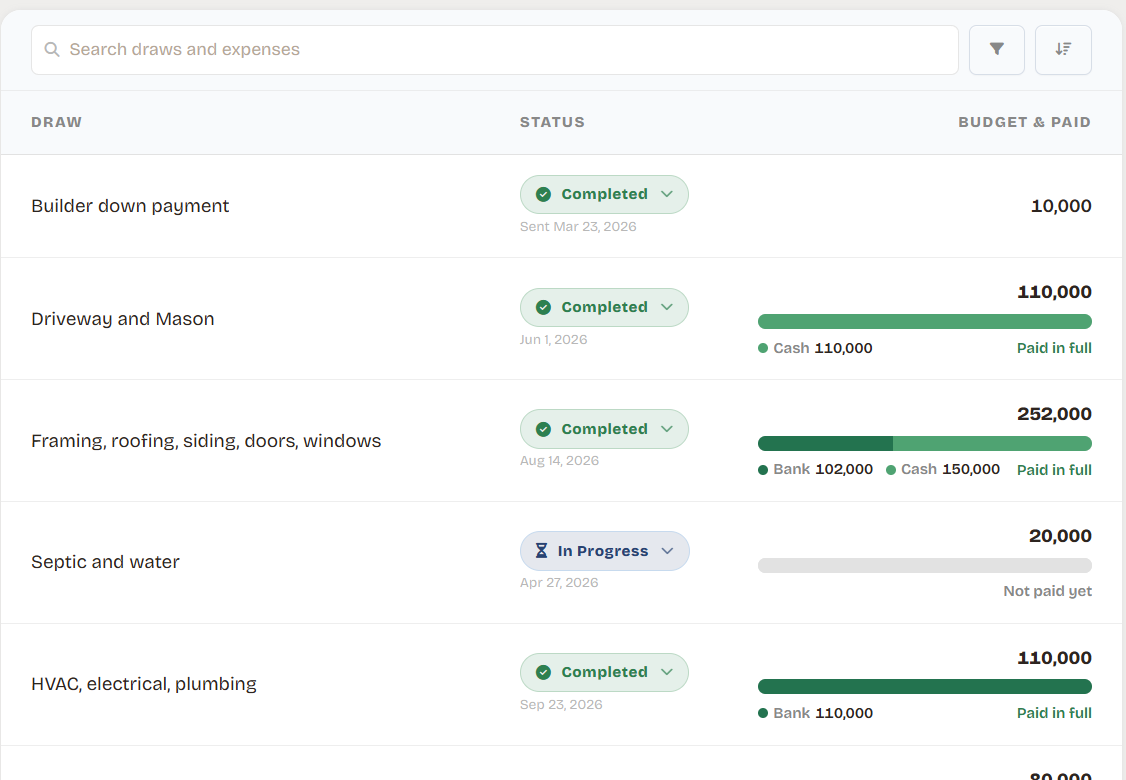
Most custom home builds have 6 to 10 draws. The exact number and amounts are set in a draw schedule that you and your lender agree on before construction begins. That schedule becomes the financial backbone of your build — every phase is funded through it, and every cost overrun eventually shows up in it.
How the draw process works
When a phase is complete, you or your builder submit a draw request to the lender. The lender sends an inspector to verify the work is actually done. Once approved, the lender releases the funds — either directly to the builder or to you, depending on how your loan is structured.
The sequence from request to funds typically looks like this:
- Your builder completes a phase of construction
- You or your builder submit a draw request with supporting documentation
- The lender schedules an inspection
- The inspector confirms the work is complete and up to code
- The lender releases the funds
Delays happen when inspections find incomplete work, when documentation is missing, or when there are outstanding liens from unpaid subcontractors. If your builder expects payment immediately after completing a phase and the draw takes a week to process, that gap creates cash flow pressure at every milestone.
How construction loan interest accrues
Construction loans are interest-only during the build, and you only pay interest on what has actually been drawn — not on the full loan amount. Early in the build, your monthly interest payment is low. As draws accumulate, the payment grows.
On a $600,000 construction loan at 7%, the monthly interest on the first $100,000 drawn is about $583. After all draws are funded, the monthly interest payment on the full amount is roughly $3,500. By the final draw, you're paying interest on the full loan balance. Plug in your own loan with the construction loan interest calculator.
This creates a direct connection between draw timing and monthly cost. Knowing where you are in the draw schedule tells you roughly what you're paying each month — and what it will cost if the build runs long.
What can go wrong with draws
The most common draw problems are preventable with good tracking:
- Failed inspections — the inspector finds work that isn't complete or doesn't meet code. The draw is held until the issue is resolved, which can delay payment to your builder and stall the next phase.
- Missing documentation — your builder may need to provide lien waivers from subcontractors before a draw can be released.
- Lien claims — if a subcontractor files a mechanics lien because they haven't been paid, the lender may hold draws until the lien is resolved.
- Schedule mismatches — if construction runs ahead of the draw schedule, you may have completed phases waiting on draws. If draws are released before phases are truly complete, you've paid for work not yet done.
How change orders affect the draw schedule
A change order — any agreed-upon change to the original scope or cost — ripples through the draw schedule. A $15,000 window upgrade might increase the amount needed at a specific draw, shift costs into a later phase, or require a draw schedule revision with the lender.
The problem isn't any single change order. It's that they accumulate throughout the build, and each one quietly changes the picture. Without a system tracking the cumulative effect, you can be well into construction before realizing the original draw schedule no longer reflects what's actually happening.
How to track draws effectively
At a minimum, track for each draw:
- Planned draw amount vs. actual funded amount
- Cumulative amount drawn vs. total loan amount
- The date the draw was requested and the date funds were received
- The running interest impact of each draw
- Any change orders that affected that phase
The harder problem is keeping draw data connected to the rest of the build's finances — remaining loan balance, contingency, projected final cost, and what the finished-home payment will look like after close. When those live in separate spreadsheets, the connection breaks every time something changes.
Keep reading
How Construction Loans Work
How construction loans differ from mortgages, how qualifying works (including as your own contractor), interest-only payments, and converting to a permanent loan.
Read guideConstruction Loan Interest Calculator
See how much interest you pay while you build, month by month, from your loan size, rate, and build length.
Open calculatorConstruction Loan Interest vs Mortgage Payment
Understand the difference between the temporary build-phase payment and the long-term mortgage payment after completion.
Read guide