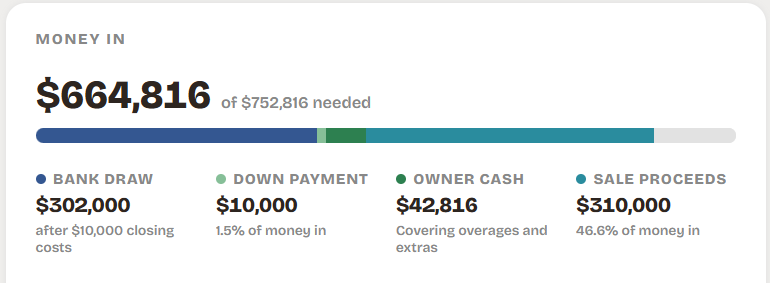
This is one of the most practical decisions in the whole project. Selling first often improves cash and reduces debt pressure, but it can also force temporary housing and a compressed timeline. Keeping the home longer can make the move gentler, but it may tighten DTI and monthly carrying cost.
Sell-first upside
More cash
available earlier if you sell first
Carry-longer upside
More flexibility
if you keep the home longer and avoid a rushed move
Main tradeoff
DTI shift
depending on whether both housing payments overlap
When selling first usually helps
- You need the equity from your current home to reduce the construction loan or fund land, site work, or contingency.
- Your debt-to-income ratio is already close to the lender limit and carrying both housing costs would make approval harder.
- You want a bigger reserve cushion during the build instead of tying up liquidity in two homes at once.
When keeping the home longer may make sense
- You have enough income and reserves to absorb a temporary overlap without putting the rest of the plan at risk.
- You want to avoid moving twice or living in temporary housing during a long build.
- You are trying to give the build schedule room, knowing new construction rarely lands on the earliest date.
The hard part is that the overlap is rarely just the mortgage. It often includes utilities, maintenance, storage, temporary rent, and the emotional cost of making rushed decisions because the move and the build are now on the same clock.
What this changes financially
The decision ripples through more than one number:
- Available cash for down payment, reserves, and contingency
- Construction-period DTI and finished-home DTI
- Temporary carrying cost during the overlap
- How much pressure the build schedule puts on the rest of your life
A simple way to decide
Run both scenarios side by side. In one version, assume the current home is sold and the equity is available. In the other, assume you carry both homes for a period long enough to absorb a normal construction delay. Compare the monthly strain, the reserve cushion, and how exposed you feel if the build takes longer than planned.
The better choice is usually the one that leaves you with more room, not the one that looks best only if everything goes perfectly.
Keep reading
Can I Afford to Build This House?
Model the finished-home payment and DTI so you can see whether the build still fits your monthly life.
Open calculatorDTI and Construction Loans
What debt-to-income ratio means for a construction loan and why the finished-home DTI is the number that matters most.
Read guideHow Construction Loans Work
How construction loans differ from mortgages, how qualifying works (including as your own contractor), interest-only payments, and converting to a permanent loan.
Read guide