Most custom home contracts are signed before you have picked your flooring, lights or cabinets. Allowances hold a place in the price for those choices. Your selections are what fill them in, and the gap between the two is where a lot of build budgets quietly drift.
What an allowance is
An allowance is a dollar amount the builder puts in the contract for an item you will choose later. A $30,000 kitchen allowance, a $27,000 flooring allowance, a $1,500 lighting allowance. The builder prices the house with those numbers in it, so the contract total looks settled even though dozens of decisions are still open.
Allowances are useful, but they are only as good as the numbers behind them. An allowance set low to make the bid look competitive becomes an overage later, after you have already signed and borrowed.
How selections draw against an allowance
Each selection is a real choice with a real price: the exact tile, the vanity you want in the main bath, the garage door with an opener. Add up the selections under an allowance and compare the total with the allowance amount.
- Selections total more than the allowance: the difference is an overage you will owe.
- Selections total less: the difference is a credit, once every pick is final.
- Some picks are still a maybe: price them anyway, so the total reflects where you are likely to land.
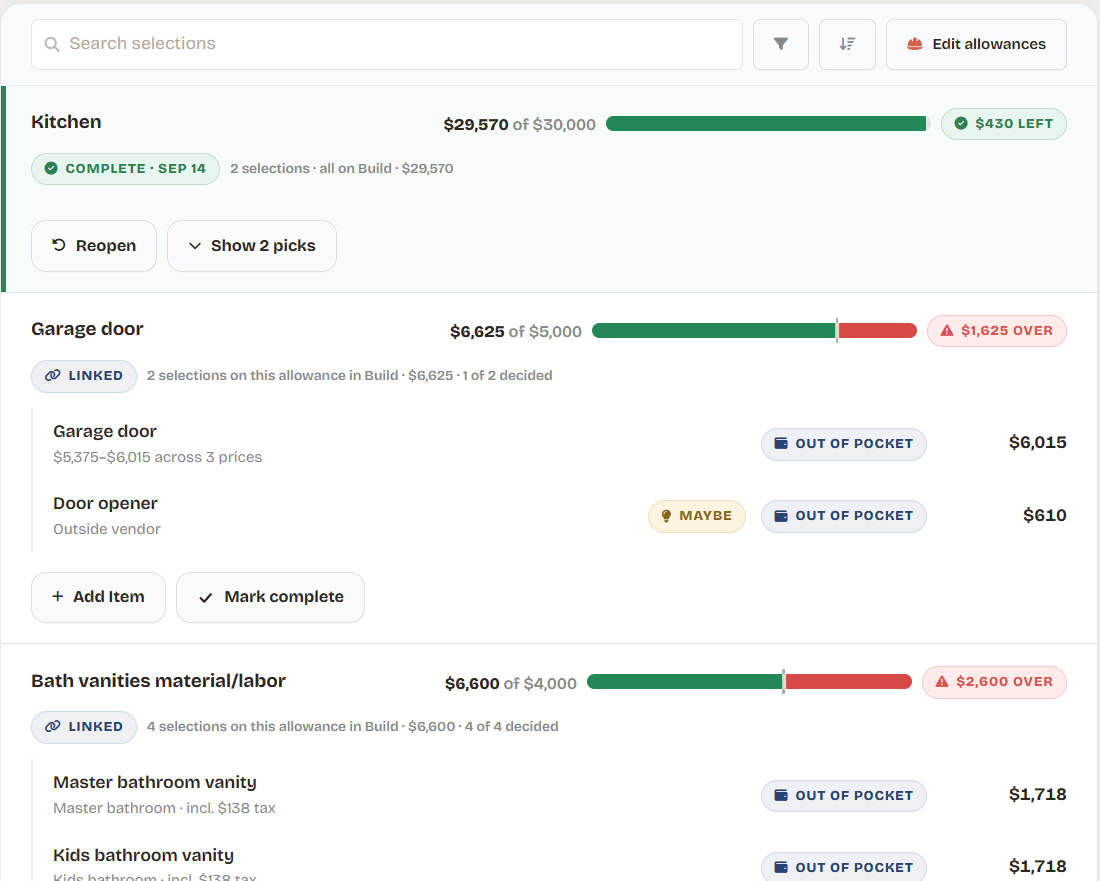
Who pays when a pick goes over
In nearly every contract, the homeowner. The overage is billed as a change order or folded into a later draw, and some builders add their markup to it. That money usually comes from your cash, not the construction loan, because the loan was sized before the overage existed.
It also helps to know which picks the builder pays for and which you buy yourself. An appliance package bought directly from a store is out of pocket from day one, even if it never touches the builder contract. Track both, or the total will look smaller than what you will actually spend.
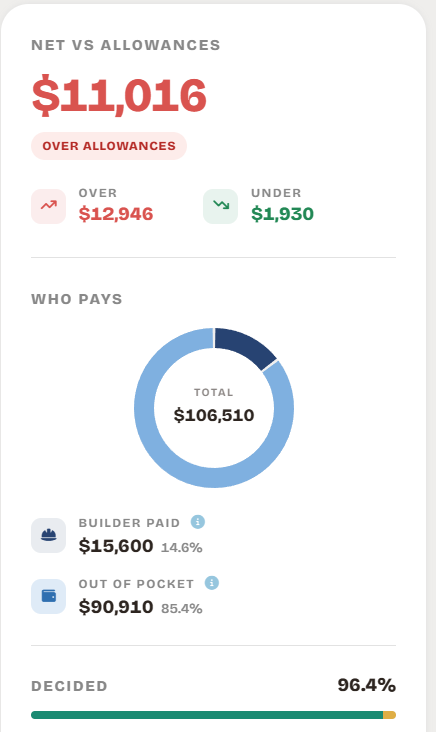
Count overages now, savings later
This is the rule that keeps a budget honest. An overage is real the moment you choose something over the allowance, so count it right away. A saving is not real until every pick under that allowance is final. A lighting allowance that is $1,000 under because half the fixtures are not chosen yet is not $1,000 saved.
Groundbase works this way: allowance overages move the projected cost immediately, and savings are held back until the selection is marked complete. The held amount is shown on its own line, so the numbers still add up.
How to keep selections from becoming overages
- Ask how each allowance was set before you sign. A number with no quote behind it is a guess.
- Price your first choice early, even if you are not ready to commit.
- Collect two or three prices for the big items: flooring, cabinets, countertops, lighting.
- Decide the expensive categories first, while there is still room in the budget to trade.
- Keep a contingency for the overages you will not avoid.
Common questions
What is an allowance in a construction contract?
An allowance is a placeholder amount in the builder contract for something you have not chosen yet, such as flooring, lighting or cabinets. When you make the real selection, its actual price is compared with the allowance. Spend more and you owe the difference; spend less and the difference usually comes back as a credit.
Who pays when a selection goes over the allowance?
The homeowner, in almost every contract. The overage is usually billed as a change order or added to a later draw. Some contracts add the builder markup on top of the overage, so check how yours handles it.
When should I count an allowance as saved money?
Only once every pick under it is final. A half-finished selection that looks under budget is usually items you have not chosen yet, not savings. Overages, on the other hand, are worth counting the moment they appear.